

Education on workshop cutting safety is especially important when students are in a shared environment during lessons. Teaching in universities, colleges and other higher education settings often involve several students with different skill levels working in the same space.
The most effective way to improve workshop cutting safety is by combining structured teaching methods with clear physical workspace design. For example, defining safe cutting zones, improving visibility of work areas and reducing uncontrolled tool handling helps to keep labs and workshops safe for everyone.
Cutting mats for education are an excellent, low cost solution that immediately create safe cutting zones and workshop layouts. This helps improve student safety and supports teaching during laboratories, engineering and design workshop lessons.
Why Workshop Cutting Safety Education is a Growing Priority
Workshop cutting safety is becoming more important as many educational providers introduce more hands-on, practical learning opportunities to their university or college students. However, it is important to keep in mind that shared environments mean more students, more tools and more opportunities for unsafe handling.
Key reasons include:
- Higher student numbers in laboratories and engineering facilities
- Increased use of cutting tools in design and fabrication tasks
- Mixed experience levels in shared workshops
- Greater focus on workshop safety compliance standards
Many higher education institutions are now integrating cutting mats, designed for educational settings to ensure consistent lab and workshop cutting safety across all learning spaces.
Controlled tool usage, clear behavioural rules and structured supervision are essential in reducing accidents in shared student workspaces. These principles reinforce the importance of defined working areas and disciplined environments in workshop cutting safety education.
The Real Safety Challenge in Shared Student Labs and Workshops
The main challenge in educational lab cutting safety is inconsistency. Students often work in unmarked or unclear areas, which increases the risk of accidents.
Common issues include:
- Lack of defined safe cutting zones workshop layouts
- Poor visibility of designated cutting areas
- Irregular supervision during practical sessions
- limited awareness of student cutting safety practices
Without an organised environment, teaching workshop discipline becomes more difficult and student safety standards become inconsistent across laboratories and engineering facilities.
How Safe Cutting Zones in Lab Designs Improves Behaviour
Good lab design and layout greatly improves student behaviour. By introducing safe cutting zones in labs and workshops, teaching staff also find that their students have increased focus and are more likely to comply with safety measures. When students can clearly see where cutting is allowed, they are more likely to naturally follow structured working patterns.
Benefits include:
- Clear visual boundaries for cutting tasks
- Easier supervision for teaching staff
- Improved student cutting safety awareness
- Stronger teaching lab and workshop discipline

Why Cutting Mats are the Most Practical Safety Upgrade in Educational Labs and Workshops
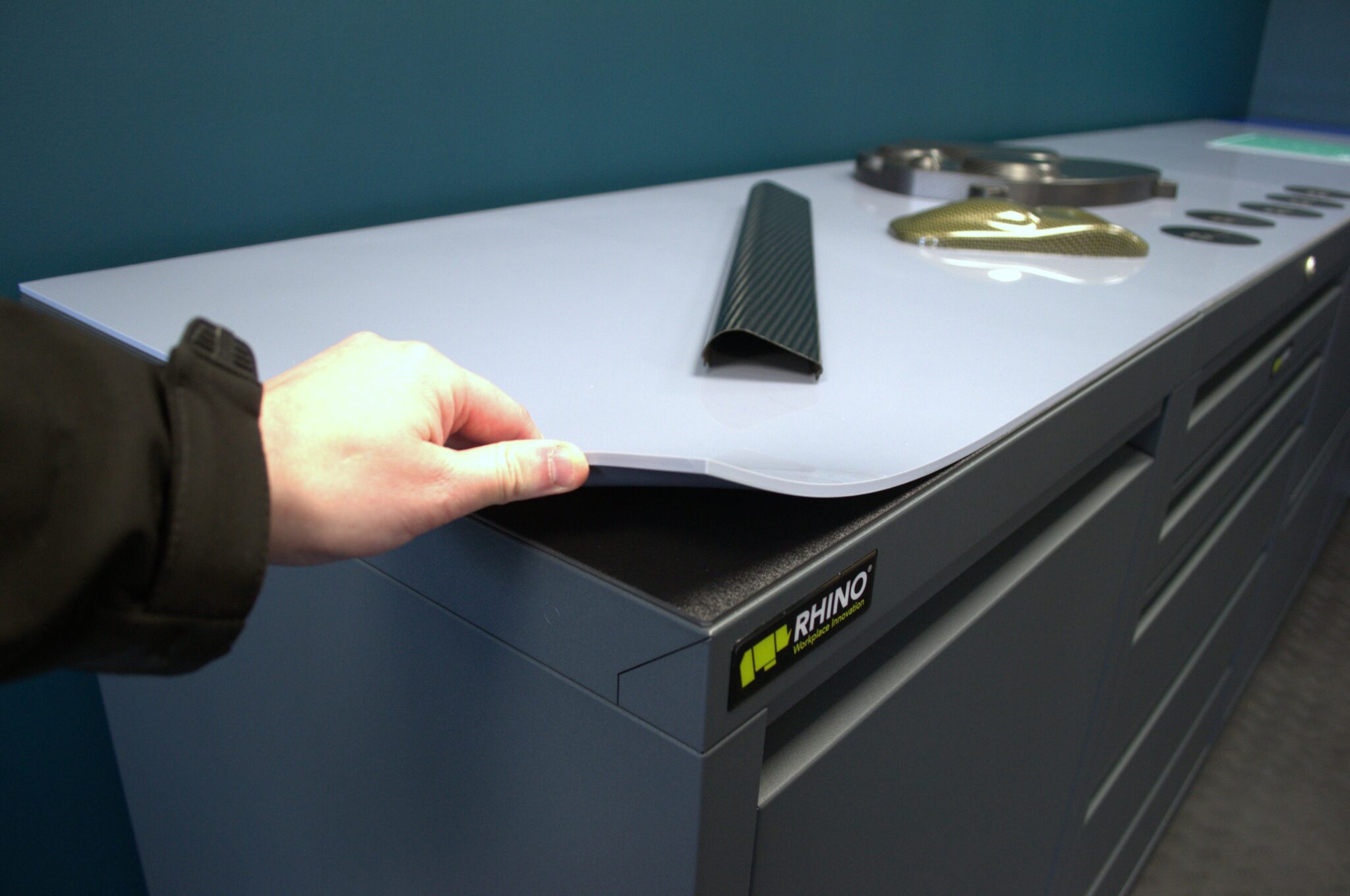
Cutting mats designed for education are one of the most effective ways to improve workshop cutting safety without major infrastructure changes. They instantly create defined working areas and improve surface protection with dedicated workbench protection mats across all types of learning environments.
Immediate Creation of Safe Cutting Zones in Lab and Workshop Layouts
Cutting mats for education instantly create safe cutting zones in laboratory and practical workshop layouts. This helps students clearly understand where cutting activities should take place and reduces confusion in shared workspaces.
Low Cost Compared to a Full Lab Redesign
These mats offer a much lower cost solution than full workshop redesign. Institutions can improve workshop cutting safety education without heavy investment or disruption.
Improved Student Workshop Safety During Daily Use
Student workshop safety improves through clearer boundaries and stable cutting areas. This reduces unsafe handling and supports reducing cutting-related injuries in high-use environments.
Easy Integration into Existing Laboratories and Engineering Facilities
Cutting mats for education can be added to existing setups without changes to infrastructure. They fit easily into laboratories and engineering facilities following modern laboratory workspace design trends.
Extended Workshop Bench Lifespan Through Surface Protection
Cutting mats protect surfaces from wear and damage, helping extend workshop bench lifespan while keeping workspaces clean and professional.
Practical Impact on Workshop Cutting Safety Education
Overall, cutting mats for education provide a fast and practical way to improve cutting safety education in workshops while maintaining smooth teaching operations.
Before vs After: Impact on Workshop Safety and Organisation
Cutting mats for education significantly improve workshop cutting safety education by transforming unstructured workspaces into clearly defined and controlled environments.
|
Aspect |
Before Implementation |
After Implementation |
|
Cutting areas |
Unclear and poorly defined |
Clearly marked safe cutting zones workshop layouts |
|
Student working zones |
Mixed and unstructured across benches |
Organised and controlled workstation layout |
|
Safety risk |
Higher risk of unsafe handling and accidents |
Reduced risk through structured workspace design |
|
Discipline level |
Limited teaching workshop discipline |
Improved student cutting safety awareness and behaviour |
|
Workshop organisation |
Cluttered and inconsistent bench usage |
Improved visual organisation of benches |
|
Safety perception |
Low visibility of safety structure |
Stronger student workshop safety across sessions |
Cost and Efficiency: Cutting Mats vs Full Lab Refits
Workshop cutting safety education can be improved either through full workshop refurbishment or investing in heavy duty workbench solutions for long-term performance.
|
Option |
Cost |
Downtime |
Result |
|
Full lab refurbishment |
High |
Significant disruption |
Complete redesign |
|
Cutting mats for education |
Low |
No disruption |
Immediate safety improvement |
Cutting mats for education provide a faster and more efficient way to enhance student lab and workshop safety without interrupting teaching schedules or requiring large capital investment.
This approach also supports sustainability by reducing waste and extending workshop bench lifespan instead of replacing entire furniture systems.
Supporting Open Days and Institutional Image
Clean and well organised workspaces play a key role in open days across universities and colleges. Cutting mats help create modern, structured environments that improve first impressions for prospective students and parents.
This supports stronger perceptions of course quality and investment, directly influencing enrolment decisions and strengthening institutional reputation in higher education environments.
Sustainability and Long-Term Workshop Value
Cutting mats for education support sustainability by reducing the need to replace entire workbenches. Instead of discarding furniture, institutions can refresh surfaces and extend workshop bench lifespan through simple upgrades.
This reduces waste, supports long term resource efficiency and aligns with sustainability goals across laboratories, engineering facilities, and shared student workshops.
Final Thoughts
Teaching cutting safety to students is most effective when modern teaching methods are combined with practical workspace design. Higher education institutions can significantly improve student lab and workshop safety by introducing cutting mats as part of structured safe cutting zones workshop systems.
By adopting this approach, institutions strengthen teaching workshop discipline, improve visual organisation, support sustainability goals and enhance the overall learning environment without the cost or disruption of full refurbishment.