
A clean, organised and professional manufacturing environment says a great deal about a company’s approach to quality. But when preparing for an audit or important customer visit, are your workbenches reflecting the standards of your business?
For many manufacturing companies, audits are a regular part of operating within demanding industries such as aerospace, automotive, defence and precision engineering.
Whether preparing for an ISO 9001 assessment, an aerospace quality audit, a 5S workplace inspection or a visit from a major customer, attention naturally turns to the condition and organisation of the production environment.
While documentation, procedures and quality controls are essential, the physical condition of a manufacturing facility also contributes to the overall picture.
And one often-overlooked area is the workbench.
Why Does Workbench Condition Matter During a Manufacturing Audit?
Workbenches are at the centre of many manufacturing and assembly operations.
Over time, even well-maintained industrial benches can become scratched, stained, marked or damaged through everyday use.
Although these imperfections do not necessarily indicate poor manufacturing quality, heavily worn work surfaces can detract from an otherwise organised and professionally managed facility.
More importantly, workbench condition can have practical implications for cleanliness, product protection and the suitability of the working environment.
A well-maintained workstation can help demonstrate:
Good housekeeping: Work surfaces are maintained, cleaned and kept free from unnecessary debris.
Product protection: Suitable surfaces are provided for handling, assembling and inspecting manufactured components.
Workplace organisation: Consistent workstations contribute to an orderly production environment.
Ongoing maintenance: The company invests in looking after its equipment and working facilities.
Professional presentation: Customers and auditors encounter a manufacturing environment that reflects attention to detail.
Which Manufacturing Audits Consider the Working Environment?
Different manufacturing audits assess different aspects of workplace management.
ISO 9001 – Quality Management
ISO 9001 includes requirements relating to infrastructure and the environment necessary for operating processes. Maintaining suitable workstations can contribute to this wider approach to quality management.
AS9100 / EN9100 – Aerospace Quality Management
In aerospace manufacturing, cleanliness, contamination control and the prevention of Foreign Object Debris (FOD) can be particularly important.
Appropriately selected workbench surfaces can form part of a wider approach to maintaining clean, controlled assembly and inspection areas.
IATF 16949 – Automotive Quality Management
Automotive manufacturers and suppliers operate under demanding quality expectations. Workstation maintenance, standardisation and process control can all contribute to a well-managed manufacturing environment.
5S and Lean Manufacturing Assessments
The 5S methodology places particular emphasis on workplace organisation:
Sort
Set in Order
Shine
Standardise
Sustain
Consistent, easily maintained workbench surfaces can support the Shine, Standardise and Sustain elements of an effective 5S programme.
Customer and Supplier Audits
Many businesses are also regularly assessed by customers.
These visits may involve reviewing manufacturing capabilities, examining quality procedures and walking through production facilities.
Presenting a clean, organised and well-maintained working environment helps reinforce confidence in the company’s approach to manufacturing.
Upgrading Workbenches Without Replacing Them
Preparing a manufacturing facility for an audit does not necessarily require significant capital investment.
Replacing entire workbenches can be expensive, disruptive and unnecessary when the underlying benches remain structurally sound.
An alternative is to upgrade the existing work surfaces with appropriately specified industrial bench protection mats.
At Rhino Cutting Mats, we supply workbench protection solutions designed for demanding industrial and manufacturing environments.
Our range includes heavy-duty workbench coverings, specialist protective surfaces and materials suitable for different production applications.
Depending on the material selected, these solutions can offer:
A refreshed, consistent appearance across multiple workstations.
Protection of existing bench surfaces from everyday wear and damage.
Surfaces that can be cleaned and maintained using appropriate procedures.
Protection for components during assembly, handling and inspection.
Options to suit specific requirements, including anti-static and ESD-controlled environments.
For companies with multiple workstations, installing matching protective coverings can also help create a more consistent and standardised working environment.

Making Workplace Improvements That Last Beyond the Audit
While an approaching audit often provides the motivation to review workshop conditions, the benefits of improved workbench protection should extend well beyond the assessment itself.
Suitable protective surfaces can help preserve existing workbenches, support everyday housekeeping and contribute to a more professional working environment.
The objective should not simply be to make a workshop look better for an auditor.
It should be to introduce practical, sustainable improvements that benefit employees, protect manufactured components and demonstrate an ongoing commitment to workplace standards.
Choosing the Right Workbench Protection
Not every manufacturing environment has the same requirements.
The most suitable workbench material will depend on the operations being carried out, including cutting, assembly, component handling, inspection or other production activities.
Factors to consider include:
The type of work being undertaken.
The level of impact, abrasion or cutting resistance required.
Cleaning and maintenance requirements.
Potential exposure to chemicals, heat or other operating conditions.
Whether electrostatic discharge (ESD) protection is required.
Workbench dimensions and installation preferences.
Careful material selection is particularly important in controlled manufacturing environments, where the suitability of a work surface should be assessed against the specific process requirements.
Preparing for an Upcoming Audit or Customer Visit?
Whether you’re upgrading a handful of workstations or standardising bench protection across an entire manufacturing facility, Rhino Cutting Mats can help.
We work with manufacturing and engineering businesses to identify suitable workbench protection materials for their applications.
From individual protective mats to larger workstation improvement projects, our team can advise on materials, dimensions and practical installation options.
Planning a workshop improvement project?
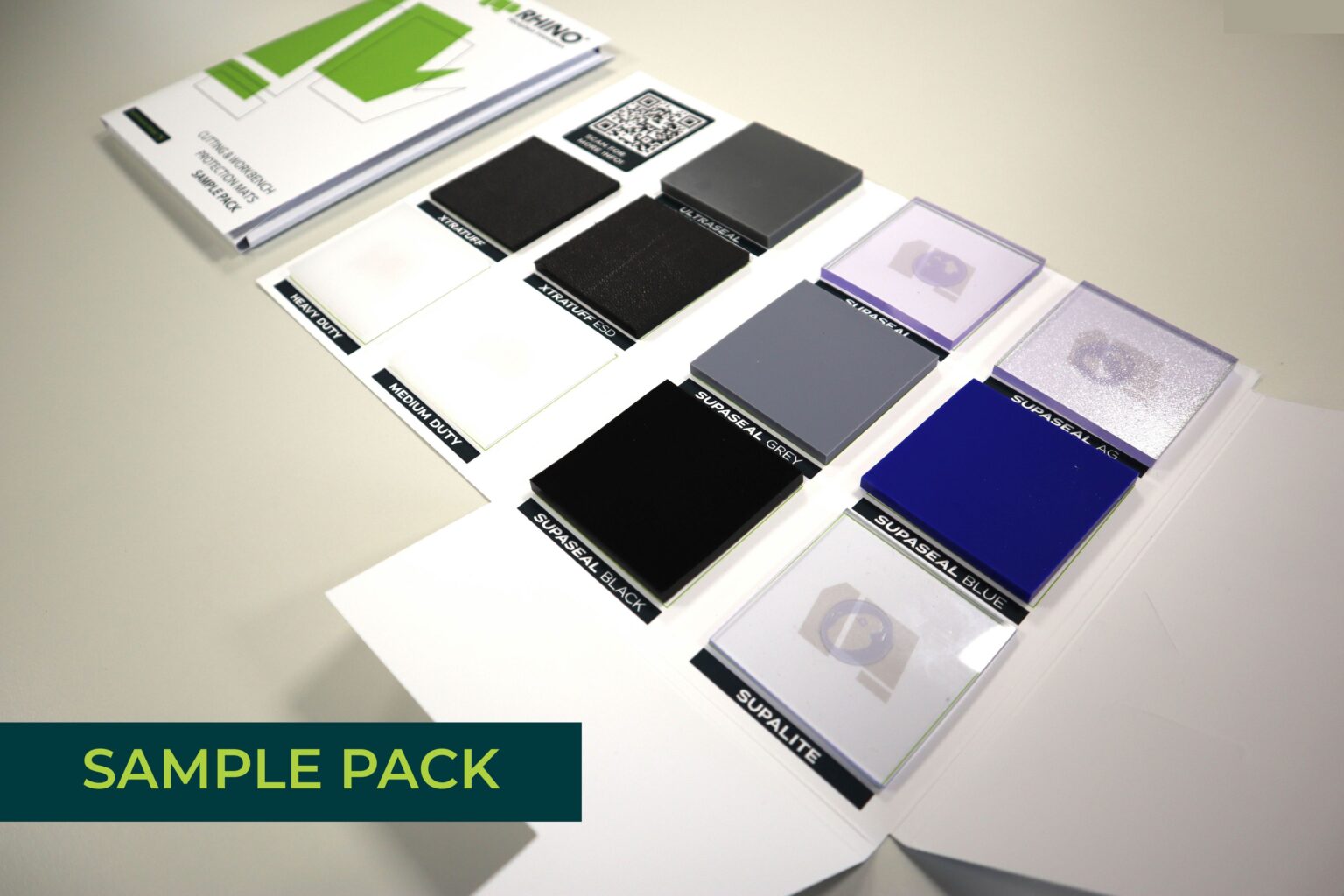
Request a sample pack to evaluate our materials, or contact our team to discuss how Rhino workbench protection could help improve your manufacturing environment.
Smarter, Safer, Cleaner Workstations.