

In modern logistics environments, speed is everything. Yet many operations still believe that faster output comes at the expense of safety. The reality is the opposite. A well-planned packing bench design improves workflow, reduces risk and increases productivity at the same time.
From layout and ergonomics to floor protection and visibility, every element of a packing station plays a role in performance. Businesses that invest in smarter workstation setups are seeing measurable gains in throughput, accuracy and employee wellbeing. The key is designing with both efficiency and safety in mind from the ground up.
Why Packing Bench Design Directly Impacts Warehouse Performance
A strategic packing bench design is one of the most influential factors in warehouse productivity. When workstations are structured correctly, tasks flow naturally, reducing delays and unnecessary movement.
Efficient layouts ensure that materials, tools and packaging supplies are always within reach. This minimises wasted time and allows staff to maintain a consistent rhythm throughout the day. A strong warehouse workbench layout also reduces handling errors, helping improve order accuracy and reduce costly returns.
Beyond speed, good design supports long-term performance. When workers operate in a controlled and organised environment, fatigue is reduced and output remains stable even during peak-demand periods.
The Hidden Bottlenecks Slowing Down Your Packing Stations
Many warehouses struggle with inefficiencies that are not immediately visible. These hidden issues often stem from poor planning rather than workload.
One of the most common problems is an ineffective warehouse workbench layout. When tools are scattered or storage is poorly positioned, workers are forced to reach, twist and move unnecessarily. Over time, this slows down operations and increases physical strain.
Another issue is the lack of clearly defined work zones. Without structured areas for packing, cutting and dispatch, workflows become inconsistent and chaotic.
Floor conditions are also frequently overlooked. Slippery or worn surfaces increase the risk of accidents and reduce operator confidence. This directly impacts speed, as workers naturally become more cautious in unsafe environments.
Core Principles of High-Performance Packing Bench Design
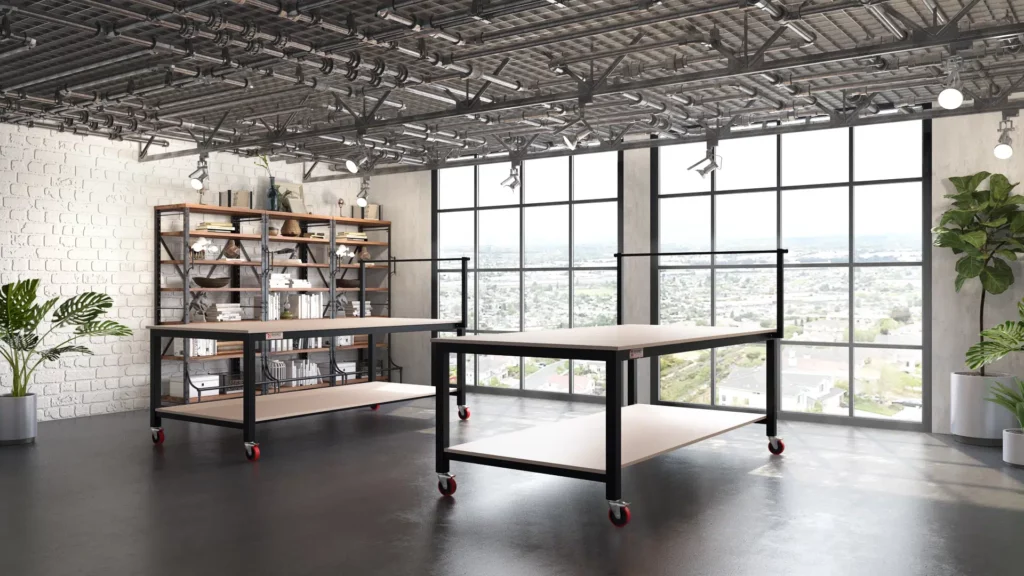
A strong packing bench design is built on structure, efficiency and adaptability. In high-volume warehouse environments, every second matters, so workstations must be designed to support smooth, uninterrupted workflows. The goal is to improve speed and accuracy while maintaining full control over packing operations.
Optimised Reach and Work Efficiency
Every tool, material and packaging supply should be placed within an easy and natural working range. This reduces unnecessary movement, limits repetitive strain and allows operators to complete tasks faster and with greater consistency. A well-planned layout directly improves daily output.
Workflow Aligned Layout Design
Effective warehouse workbench layout follows the natural flow of goods from intake through to dispatch. Whether structured in linear or U-shaped configurations, the workstation should support a logical sequence of movement. This reduces backtracking, prevents congestion and keeps operations flowing smoothly.
Ergonomics and Operator Comfort
Well-designed ergonomic packing stations help maintain correct posture and reduce physical fatigue during long shifts. Adjustable height settings and supportive workstation setups ensure that workers can maintain productivity without unnecessary strain. This directly improves both performance and long-term workforce wellbeing.
Integrated Storage and Organisation
Efficient storage systems play a key role in maintaining a clean and productive workspace. Overhead shelving, tool holders and organised compartments reduce clutter and improve accessibility. When materials are easy to locate and use, operators can focus more on speed, accuracy and consistent workflow execution.
The Missing Element: Workbench Surface Protection & Performance Matting
In many warehouse environments, the focus is often placed on workstation structure and packing bench layout, while the work surface itself is overlooked. However, it is a critical component of an effective packing bench design, directly influencing both safety and productivity in fast paced operations.
Surface protection and durability: High-quality workbench matting provides a durable, impact-resistant surface for packing tasks. It protects the bench from cuts, abrasions and repeated use, helping maintain a consistent and reliable workspace in high-volume environments.
Improved precision and control: A stable, non-slip work surface allows operators to handle tools, packaging materials and products with greater accuracy. This is especially important for tasks involving cutting, measuring or assembling, where consistency directly impacts output quality.
Enhanced visibility and workspace organisation: Clearly defined work areas on the bench surface help operators stay organised and focused. By improving visual clarity at the workstation level, matting supports more structured workflows and reduces the risk of errors during repetitive tasks.
Supporting efficient workflows: In busy logistics environments, well-designed workbench surfaces contribute directly to warehouse workstation efficiency. Operators can work with greater confidence, maintain consistency across tasks, and sustain a steady pace throughout long operational shifts.
Designing for Warehouse Workstation Efficiency
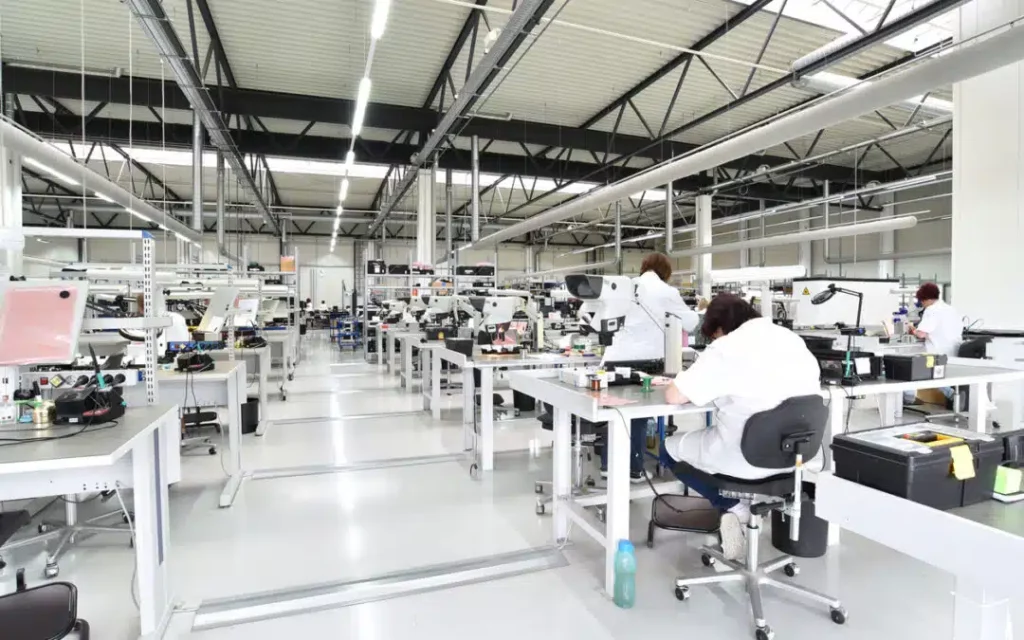
True warehouse workstation efficiency comes from combining multiple elements into one cohesive system. A well-structured packing bench design integrates layout, ergonomics and safety into a single workflow.
Efficient stations reduce downtime by eliminating unnecessary steps. They also improve consistency, ensuring that every task is performed in the same streamlined manner.
Strong ergonomic packing stations further support this by reducing fatigue and helping workers sustain high performance levels. When combined with a smart warehouse workbench layout, businesses can significantly increase output without adding additional strain on staff.
This holistic approach ensures that efficiency is not just achieved, but maintained over time.
Smart Add-Ons That Speed Up Packing Operations
Beyond core design, additional features can enhance performance even further. These enhancements support both speed and accuracy in fast-moving environments.
Common upgrades include:
- Integrated lighting to improve visibility and reduce errors
- Organised tool holders for quicker access during repetitive tasks
- Label and scanning systems to streamline order processing
- Conveyor integration to maintain continuous workflow
When paired with an optimised packing bench design, these additions help create a seamless packing experience that supports both productivity and safety.
Final Words
Designing faster packing environments is not about pushing workers harder. It is about creating smarter systems that support efficiency at every level. A well executed packing bench design improves workflow, enhances safety and delivers long term operational benefits.
By focusing on layout, ergonomics and floor safety, businesses can transform their packing stations into high performance work areas. Investing in structured warehouse workbench layout, reliable ergonomic packing stations, and solutions that improve warehouse workstation efficiency will ensure sustainable growth and consistent output in even the most demanding logistics environments.
The result is a workplace that is not only faster, but safer, more reliable and built for the future.
